

The average homeowner spends about 400 hours per year in the kitchen, according to the National Kitchen and Bath Association (NKBA, 2024). In Greenwich, where busy households, entertaining, and high expectations for fit and finish collide, kitchen workflow design is no longer a “nice-to-have”. It is the difference between a kitchen that feels effortless and one that feels cramped, chaotic, and dated.
This guide breaks down how smart workflow planning improves kitchen layout efficiency in real Greenwich homes, what the best kitchen remodeling contractors are doing differently in 2026, and the practical steps you can take before calling kitchen remodelers near me. You will learn which layouts work best for local home styles, how to size clearances, where workflow breaks most often, and how to avoid expensive rework.
Why kitchen workflow design matters more in Greenwich homes?
Workflow design is about reducing unnecessary steps, collisions, and bottlenecks while improving safety and comfort. In Greenwich, kitchens often serve multiple roles: weekday meal production, homework hub, coffee bar, catering staging, and weekend entertaining. That makes traffic planning as important as the finishes.
From a value perspective, remodeling also has heightened scrutiny. Nationally, a minor midrange kitchen remodel recoups about 96% of its cost at resale(Remodeling Magazine, Cost vs. Value, 2024). In high-value towns like Greenwich, buyers also look for kitchens that “live well”, not just photograph well. A beautiful kitchen with poor circulation can still feel like a downgrade.
There is also a project-risk angle. Kitchens remain one of the most complex rooms to remodel due to the concentration of plumbing, electrical, ventilation, and code requirements. According to U.S. Census Bureau survey data, homeowners who hired pros cited complexity and time constraints among the top reasons for doing so (American Housing Survey, 2021). Workflow planning reduces complexity by forcing early decisions about zones, appliance placement, and clearances before walls are opened.
The 2026 approach: from the “work triangle” to zones and traffic lanes
The classic “work triangle” (sink, range, fridge) is still useful, but it is incomplete for modern living. In 2026, the best kitchen remodeling Greenwich outcomes come from designing zonesplus traffic lanes, especially in households with multiple cooks and frequent guests.
Traffic lanes: the hidden driver of “feels bigger” kitchens
Traffic lanes keep non-cooks from crossing the hot prep and cooking areas. This is critical for Greenwich homes where the kitchen often connects to family room, mudroom, and patio. The goal is to prevent the “pinch point” where someone grabbing seltzer collides with someone carrying a hot sheet pan.
Pro best practice is to plan at least one “bypass path” to the fridge or beverage station that does not cut through the main prep zone. When your designer talks about “primary” and “secondary” circulation, they are trying to eliminate those daily micro-frustrations that accumulate over years.
Layout types that work best in Greenwich (and when they fail)
Greenwich housing stock often includes Colonials, expanded capes, and custom new builds. Each has predictable constraints: load-bearing walls between kitchen and dining room, tight back-of-house corridors, and a constant need for mudroom connectivity. Layout selection should be driven by workflow, not trends.
Galley kitchens: high efficiency, low forgiveness
Galleys can be extremely efficient because everything is within reach. They fail when aisle width is too tight or when the fridge or dishwasher blocks the aisle. If you have a galley, your biggest win is usually a rebalanced appliance plan and a clear landing zone near the oven and sink.
L-shaped and U-shaped kitchens: best for zoning
L and U layouts support strong zone separation, especially if you place clean-up on one leg, prep on another, and cooking on the third. They fail when corners are wasted or when islands are pushed too close, creating a daily pinch point.
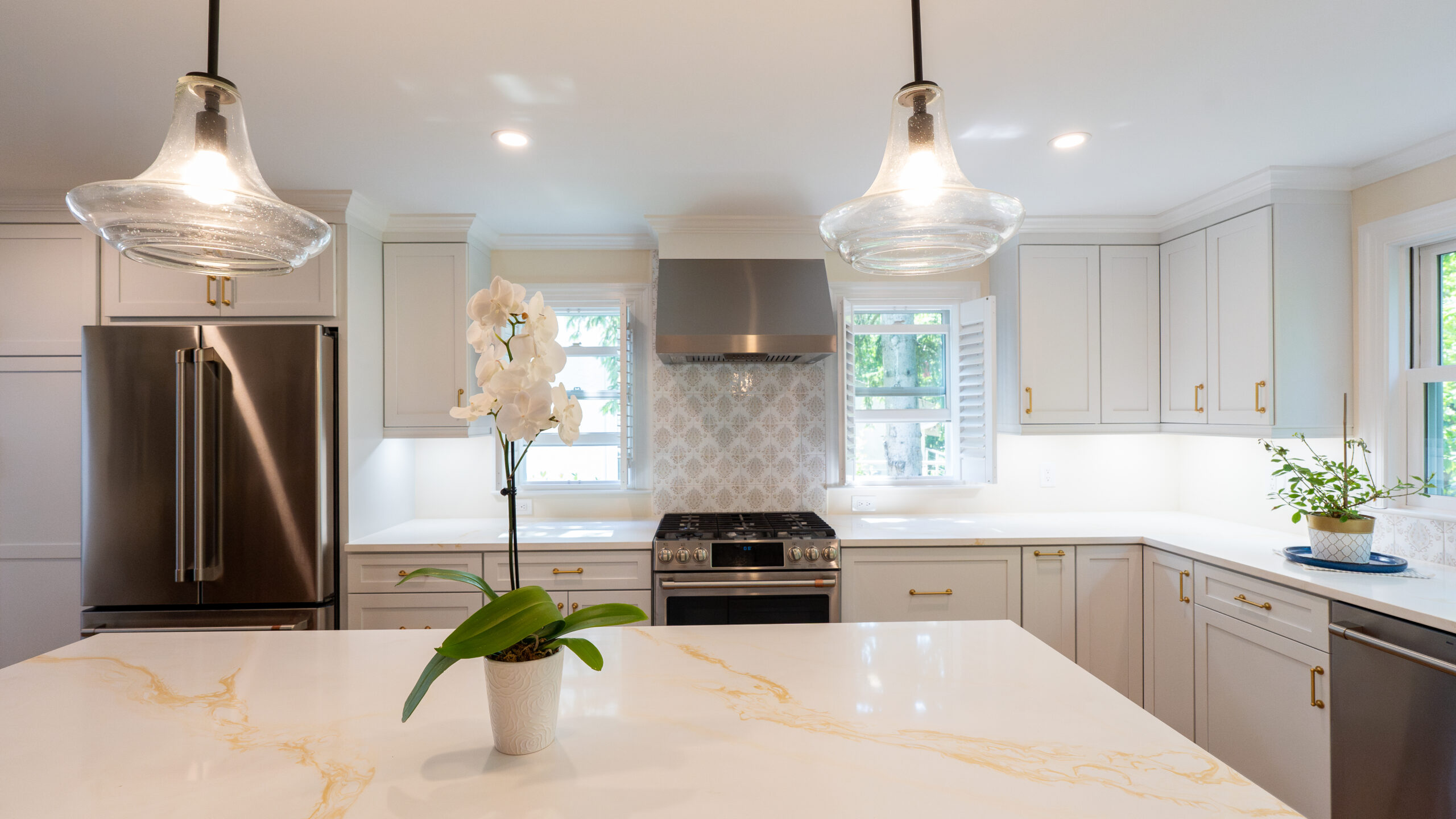
Island-forward kitchens: great for entertaining, risky for workflows
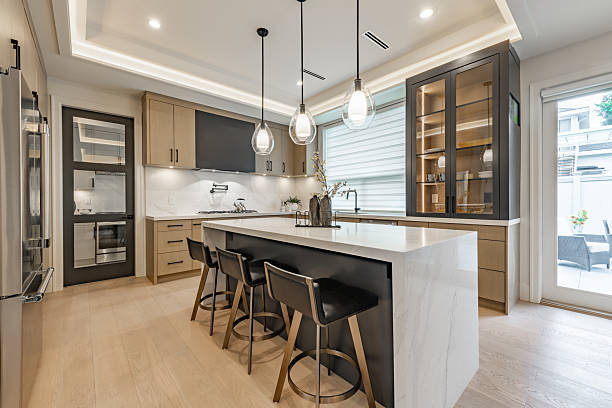
Islands are popular in 2026, but they are also the top source of “my kitchen feels tight” complaints. The island needs correct offsets and a purpose: prep, seating, storage, or all three. If the island is mainly seating, move prep to a perimeter run so guests are not leaning over your cutting board.
Measurements that materially improve kitchen layout efficiency
Workflow design becomes real when it is measured. While exact dimensions vary by household and local conditions, the following benchmarks are widely used by professional designers and reflect common NKBA planning guidelines (NKBA, 2024). Use them to evaluate your existing layout before you meet kitchen remodeling contractors.
| Design element | Recommended range | Why it improves workflow | Red flag if ignored |
|---|---|---|---|
| Work aisle width (one cook) | ~42 inches | Allows prep and clean-up without constant sidestepping | Hip checks and blocked dishwasher doors |
| Work aisle width (two cooks) | ~48 inches | Supports parallel tasks and safe pass-by | One person must stop working to let another pass |
| Landing space at sink and cooktop | At least 12 inches on one side, ideally more | Creates “drop zones” for prep, hot pans, and dishes | Items end up in the walkway or on the stove |
| Dishwasher placement | Adjacent to sink, clear of traffic | Minimizes steps during load and unload | Open door blocks the main aisle |
| Counter height (typical) | 36 inches (with adjustments as needed) | Reduces fatigue for average users | Back strain and awkward prep posture |
Actionable tip:Tape your proposed island footprint on the floor using painter’s tape, then run a “dinner rush” simulation. Open the dishwasher, stand at the sink, pretend to pull a sheet pan from the oven, and have another person walk from mudroom to fridge. If it feels tight during the simulation, it will feel worse on Thanksgiving.
Workflow upgrades that deliver outsized ROI in daily life
Not every efficiency gain requires moving plumbing. Some of the best improvements are about placing storage where tasks happen and removing “dead steps”. This is where experienced kitchen remodelers near mecan outperform a generic plan by designing for your routines, not a showroom.
Put storage where the work happens
This approach reduces bending and walking. It is also aligned with aging-in-place planning, which is increasingly requested in 2026 even by younger homeowners designing “forever” kitchens.
Make the fridge accessible without crossing the cook zone
A common Greenwich problem is the “fridge in the corner” that forces everyone to pass through the main prep area. Consider relocating the fridge to the edge of the kitchen near the entry, or adding a secondary undercounter fridge drawerin the beverage zone for kids and guests.
Right-size ventilation and cooking clearances
As induction cooking continues to grow, many homeowners are pairing it with higher-performance ventilation and better make-up air planning. Indoor air quality concerns remain a design driver, and the EPA continues to highlight that indoor pollutant levels can be 2 to 5 times higher than outdoor levels (U.S. EPA, updated 2024). A well-ventilated cooking zone is both a comfort and health upgrade, especially in tighter, newly air-sealed homes.
2026 trends affecting kitchen workflow design in Greenwich
In 2026, “efficiency” is increasingly tied to electrification, resilience, and flexible hosting. Several trends are showing up repeatedly in higher-end Connecticut projects.
Trend 1: Induction and all-electric kitchens
Induction cooking is gaining share for speed, control, and easier clean-up. It also changes workflow: you can place a prep-friendly counter landing area closer to the cooktop because the surface cools faster than gas grates. If you are considering electrification, plan circuits early with your kitchen remodeling contractorsso you avoid panel surprises.
Trend 2: Back kitchens and “working pantries”
Greenwich homeowners who entertain often want a secondary space for mess management: a prep sink, extra dishwasher, or catering staging. Even a compact working pantry can protect the main kitchen workflow during parties by moving clutter and repetitive tasks out of the primary zone.
Trend 3: Smarter lighting for task flow
Layered lighting has moved from luxury to standard: under-cabinet task lighting, toe-kick night lighting, and high-CRI fixtures that make food look accurate. Better lighting reduces errors and improves safety during early mornings and late cleanups.
Common mistakes to avoid (and pro fixes that save money)
Most workflow failures are not dramatic. They are small miscalculations that create daily friction. Avoiding them is one of the biggest reasons to hire an expert team for kitchen remodeling Greenwich.
Reality check for budgets: Home improvement costs are still elevated compared to pre-pandemic norms due to labor constraints and select material volatility. The Producer Price Index for construction inputs has remained sensitive in recent years (U.S. Bureau of Labor Statistics, 2024), which is why getting the layout right the first time is one of the most cost-effective decisions you can make.
A practical workflow audit you can do before calling kitchen remodelers near me
If you want better proposals and fewer change orders, start with a workflow audit. This gives your designer and builder real inputs instead of vague preferences.
What if you cannot move plumbing?
You can still improve kitchen layout efficiencyby relocating the dishwasher, changing door swings, revising cabinet storage to match zones, and adding a beverage station to pull traffic away from prep.
Conclusion
Kitchen workflow design is not abstract theory. In Greenwich homes, it is one of the most practical ways to reduce daily friction, protect your investment, and make the kitchen feel calm even when the house is full.
If you are considering kitchen remodeling Greenwich, Remodeling Consultants can help you evaluate your current layout, run a workflow audit, and translate your routines into a buildable plan that your contractor can price accurately. Contact Us for more information.
Frequently Asked Questions
Q1: What is kitchen workflow design, and how is it different from kitchen style?
Workflow design focuses on how you move through prep, cooking, clean-up, and storage with minimal steps and conflicts. Style is the visual layer: doors, colors, countertops, and fixtures. A high-end look cannot compensate for a layout that creates daily bottlenecks.
Q2: How does kitchen workflow design improve kitchen layout efficiency?
It reduces unnecessary walking, prevents people from colliding in key zones, and ensures appliances open without blocking traffic. The result is faster meal prep, easier clean-up, and a kitchen that feels larger because circulation is clear.
Q3: Is the work triangle still relevant in 2026?
Yes, but it is only a baseline. Most 2026 kitchens add zones like beverage, baking, and serving, which are not captured by the triangle. Zone planning is usually a better tool for households with multiple cooks or frequent guests.
Q4: How do I choose between an island and a peninsula in a Greenwich kitchen remodel?
Choose an island when you have enough width to maintain proper work aisles and still seat people comfortably. Choose a peninsula when space is tight or when you need to protect a main traffic lane from cutting through prep. A floor-tape mockup often makes the decision obvious.
Q5: What should I ask kitchen remodeling contractors about workflow?
Ask how they plan zones and traffic lanes, what aisle widths they recommend for your household, and how they prevent the dishwasher or fridge from blocking circulation. Also ask how they handle landing space near ovens and the sink. A good contractor will translate your routines into a measurable plan.
Q6: When should I hire kitchen remodelers near me for layout planning?
Bring a design-build team in once you have your goals, budget range, and must-haves. Early involvement reduces change orders because appliance specs, electrical planning, and structural constraints are addressed before drawings are finalized.
Q7: Can I improve workflow without a full kitchen remodeling Greenwich project?
Often, yes. You can add task lighting, adjust storage to match zones, swap to deeper drawers, and improve trash and recycling placement. If the bottleneck is structural, like a poorly placed doorway or undersized aisle, a remodel may be the more cost-effective long-term fix.
Q8: What is the biggest workflow mistake you see in high-end kitchens?
Oversized islands that look impressive but choke circulation. They tend to force everyone through the cooking zone and create daily collisions. Right-sizing the island or shifting seating usually restores function without sacrificing aesthetics.
Q9: Should I prioritize resale or daily efficiency in my kitchen remodel?
In most Greenwich homes, you can do both by focusing on timeless workflow fundamentals: clear aisles, strong ventilation, and sensible zones. Buyers notice when a kitchen “works”, and you benefit immediately. If resale is imminent, keep the plan broadly appealing and avoid overly customized layouts that limit flexibility.
Q10: How long does a workflow-focused kitchen remodel typically take?
Timelines vary by scope, permitting, and lead times, but many full kitchen remodels run several months from design through completion. A workflow-first plan can reduce construction delays by resolving appliance locations, electrical loads, and cabinet details before work begins. Your contractor should provide a written schedule with decision deadlines.