


Bathrooms are one of the most expensive rooms to remodel, and plumbing is often the hidden variable that makes budgets and timelines swing. In fact, homeowners spend the most on bathroom renovations compared with other renovation types, with a median spend of $15,000 (Houzz, 2023). In Riverside, CT, where housing stock includes older homes alongside newer builds, plumbing upgrades can be the difference between a smooth, code-compliant remodel and weeks of surprises behind the walls.
This guide explains how plumbing decisions shape design, costs, scheduling, and long-term performance. You will learn when to keep plumbing in place versus move it, which upgrades deliver real value, how 2026 trends affect choices, and how to vet bathroom remodelers Riverside homeowners trust, including how to compare bathroom contractors near me and bathroom renovation contractors near me.
Why plumbing is the “critical path” in a bathroom remodel?
Most bathroom remodeling services are ultimately constrained by plumbing realities: water supply sizing, drain and vent geometry, fixture rough-in locations, and shutoff access. When plumbing is outdated or poorly configured, it can trigger cascading changes to framing, electrical, waterproofing, tile layout, and even the vanity footprint.
Plumbing is also where risk concentrates. Leaks and water damage are common and expensive, and insurers pay attention to water-related claims. For context, water damage and freezing represent about 27.6% of homeowners insurance losses(Insurance Information Institute, 2022). That’s why an “aesthetic-only” update can be a false economy if the piping, valves, and drains are near end-of-life.
How Riverside CT home styles and ages affect plumbing upgrade decisions?
Riverside homes can include mid-century and earlier construction where plumbing may be galvanized steel, cast iron, or older copper, alongside modern PEX systems. The older the home, the more likely you will encounter issues like corrosion, restricted flow, undersized vents, or patched renovations from prior owners.
A remodel that adds a rain shower, body sprays, or a freestanding tub can expose supply constraints quickly. Today’s consumers are also remodeling to age in place. The AARP reports nearly 9 in 10 adults age 50+ want to remain in their homes as they age (AARP, 2021). That trend drives demand for comfort-height toilets, curbless showers, and better temperature control, all of which intersect directly with plumbing design and valve selection.
High-impact plumbing upgrades that change remodel outcomes
Not all plumbing upgrades are equal. Some directly improve daily experience (pressure, temperature stability, noise), while others reduce risk (leak prevention, accessible shutoffs). The best bathroom remodeling services prioritize upgrades that remove constraints and protect the finishes you are paying for.
1) Replacing old supply lines and adding modern shutoffs
If your bathroom has older shutoff valves that seize or leak, replacing them during the remodel is usually low-cost compared with the damage they can cause later. Upgrading to modern quarter-turn shutoffs and adding access panels (where appropriate) improves maintainability without compromising design.
2) Upgrading valves for performance and safety
Pressure-balance or thermostatic mixing valves help stabilize shower temperature when other fixtures run. This matters more as families add high-demand fixtures and as households run multiple appliances simultaneously. It is also a safety and comfort upgrade that supports aging-in-place goals.
3) Drain, vent, and trap corrections
Slow drains and sewer odors are often venting or slope problems, not the fixture itself. Correct venting improves drain performance and helps prevent siphoning of traps. Addressing these issues during a remodel avoids tearing out tile later.
4) Leak prevention and monitoring
Water sensors and automatic shutoff valves are becoming more common in 2026, especially for second-floor baths. While the U.S. EPA WaterSense program primarily addresses fixture efficiency, the broader market trend is toward “smart water” risk reduction, driven by insurance incentives and rising repair costs.

Cost, timeline, and value: what plumbing changes really do to the budget
Plumbing scope is one of the biggest drivers of variance in remodel pricing. A “keep it where it is” remodel typically focuses on finishes, while relocating fixtures adds labor, opening floors/walls, and more inspections. National cost benchmarks illustrate why planning matters: the average bathroom remodel is often cited around $12,000, with a typical range of $6,639 to $17,621(HomeAdvisor, 2024). In Fairfield County markets, real-world pricing can run higher depending on labor, access, and finish level.
Return on investment is also tied to plumbing quality. A midrange bathroom remodel has a nationwide average cost of $25,251with an estimated ROI around 73.7%(Zonda Media, Cost vs. Value Report, 2024). Bathrooms with reliable valves, quiet drains, and code-correct venting tend to show better long-term satisfaction and fewer call-backs, which matters if you plan to sell or rent.
Plumbing upgrade impact table
| Upgrade scenario | Typical scope | Budget impact | Timeline impact |
|---|---|---|---|
| Keep fixtures in place | New fixtures, trim, vanity, waterproofing; minimal rough plumbing changes | Lowest relative cost; plumbing is mostly “refresh” | Fastest; fewer inspection touchpoints |
| Replace supply lines and valves (same layout) | New shutoffs, updated supply piping, new mixing valve, accessible cleanouts as needed | Moderate increase; high risk-reduction value | +1 to 3 days typically depending on access |
| Move vanity or shower | New drain/vent routing, framing access, potential subfloor repair | Higher increase; more labor and patching | +3 to 10+ days depending on complexity |
| Move toilet or add tub | Major drain relocation, slope constraints, joist rules, possible stack work | Highest increase; structural coordination often required | +1 to 3 weeks possible, plus inspection scheduling |
Design choices that depend on plumbing
Some of the most popular 2026 bathroom features are plumbing-led decisions in disguise. If you want a luxury shower, floating vanity, or curbless entry, your contractor should validate rough-in feasibility before you finalize tile and cabinetry orders.
Curbless showers and linear drains
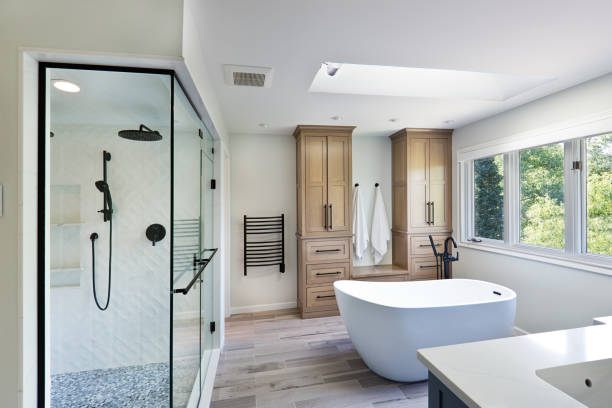
Curbless showers require thoughtful slope and waterproofing coordination with plumbing placement. In many homes, achieving a true curbless entry may require recessing the subfloor or using a compatible shower system. Linear drains can simplify slope, but you still need correct trap placement and service access.
Wall-hung toilets and in-wall carriers
Wall-hung toilets free up floor space and can look premium, but they require a robust in-wall carrier system and access planning for service. They can also change how sound transmits through walls, which is important in second-floor baths.
Luxury showers: rain heads, dual outlets, body sprays
Multi-outlet showers can strain supply if pipe sizing and valve capacity are not planned. A reputable plumber or bathroom renovation contractor will confirm flow requirements and pressure realities before rough-in, preventing the common “looks great, feels weak” outcome.
2026 trends and code-adjacent realities shaping plumbing choices
In 2026, three forces are shaping bathroom plumbing decisions: resilience, efficiency, and smarter controls. Homeowners want upgrades that reduce risk and operating cost without sacrificing comfort.
Trend 1: Water efficiency without “low-flow regret”
WaterSense-labeled fixtures remain a strong baseline for efficiency, and manufacturers have improved spray patterns and valve engineering so efficient fixtures feel better than earlier generations. As a reminder of the stakes, toilets are one of the largest indoor water uses. The EPA notes toilets account for nearly 30% of an average home’s indoor water consumption(U.S. EPA WaterSense, updated 2024). Upgrading old toilets and optimizing supply can reduce water use while improving flush performance.
Trend 2: Smart leak detection and automatic shutoffs
Leak sensors under vanities and behind toilets are increasingly common, and whole-home shutoff valves are being adopted in higher-value properties. For Riverside CT homeowners with finished basements or second-floor bathrooms, leak detection is a “protect the investment” feature, not a gadget.
Trend 3: Aging-in-place plumbing-friendly layouts
Homeowners are prioritizing stability, access, and comfort. That means more handheld showerheads, well-placed blocking for future grab bars, and valves placed for reach. These are easier to do during rough plumbing than after tile is installed.
Conclusion
In Riverside CT homes, plumbing upgrades are not a side quest. They are often the deciding factor in whether your remodel delivers lasting comfort, strong performance, and low risk.
If you are planning a remodel and comparing bathroom renovation contractors near me, prioritize teams that document the plumbing scope, test their work, and coordinate waterproofing as a system. Remodeling Consultants can help you evaluate your existing plumbing, stress-test your layout ideas, and build a clear scope that protects your investment. Next step: schedule a plumbing-first remodel assessment before you order fixtures or finalize tile. Contact Us to schedule a plumbing-first remodel assessment before you order fixtures or finalize tile.
Frequently Asked Questions
How do plumbing upgrades affect the cost of bathroom remodeling services?
Plumbing upgrades can shift a remodel from a cosmetic project to a systems project, especially if drains, vents, or fixture locations change. Replacing supply lines and valves in-place is usually a moderate add-on, while moving a toilet or shower can meaningfully increase labor, repairs, and inspection needs.
Should I replace old pipes during a bathroom remodel if they are not leaking?
If walls are open and pipes are near end-of-life or poorly accessible, replacement is often cost-effective risk management. Even without active leaks, corrosion and restricted flow can reduce performance and increase the chance of failure after you invest in new tile and finishes.
Can I move my toilet to a different location in my Riverside CT bathroom?
Often yes, but it depends on drain routing, slope, joist direction, and venting. Moving a toilet is typically one of the most complex plumbing changes, so it should be validated early with your plumber and remodeler before finalizing layouts.
What plumbing upgrades are most important for a curbless shower?
Drain placement, trap access, and slope planning are the essentials, along with a high-quality mixing valve and correct waterproofing integration around penetrations. Many curbless designs also benefit from a linear drain to simplify pitch, but the subfloor structure must support it.
How do I know if my bathroom drain and venting need work?
Warning signs include slow drains, gurgling, sewer odors, or a toilet that bubbles when other fixtures run. A qualified contractor can evaluate venting and drain slope during demolition, which is the most efficient time to correct issues.
Are smart leak detectors and shutoff valves worth it in 2026?
They are increasingly worthwhile in second-floor bathrooms or homes with finished spaces below, where a small leak can cause major damage. At minimum, point sensors under vanities and near toilets provide early warning, and whole-home shutoffs add another layer of protection.
Do I need a permit for plumbing changes in a bathroom remodel?
In many cases, yes, especially when moving fixtures, altering drain and vent lines, or changing supply routing. Your contractor should confirm local requirements and include permit and inspection planning in the project schedule.
How can I compare bathroom remodelers Riverside homeowners recommend?
Compare written scopes, not just prices: look for valve specifications, waterproofing approach, testing steps, and how changes are handled. Ask for recent project references with similar plumbing complexity, and confirm who is performing the licensed plumbing work.
What’s the biggest plumbing-related mistake homeowners make when hiring bathroom contractors near me?
The most common mistake is choosing based on finishes alone without verifying how the contractor manages rough plumbing, venting, and water protection details. A low bid can become expensive if it leads to change orders or hidden shortcuts behind the walls.
When should I keep plumbing in place versus relocating fixtures?
Keep plumbing in place when the layout works and the goal is to control cost and timeline. Relocate fixtures when the current layout is functionally flawed, accessibility needs require it, or when the plumbing is already being rebuilt and the value of improved flow and space is worth the added complexity.