

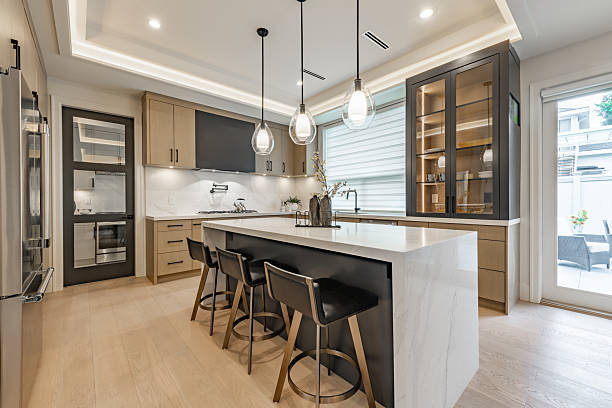
Bad kitchen lighting is one of the fastest ways to make a new kitchen feel “off” even when the cabinets and counters are beautiful.Lighting influences perceived cleanliness, comfort, and even how colors read on stone and paint. In fact, U.S. lighting energy use still represents a meaningful share of residential consumption, and LEDs remain a top efficiency upgrade for homes (U.S. DOE, 2023). For homeowners planning kitchen remodeling services Riverside, layered lighting is the blueprint we use to prevent harsh glare, eliminate shadowy prep zones, and create a kitchen that works for weekday cooking and weekend entertaining.
This guide breaks down the three core layers (ambient, task, accent), shows where Riverside, CT projects commonly succeed or struggle, and provides practical specs you can hand to your designer, electrician, or kitchen remodelers Riversideteam. You will also learn 2026 trends, code and safety considerations, and a room-by-room checklist you can apply immediately.
Why lighting layers matter in Riverside, CT kitchen renovation projects?
Layered lighting is not a style preference. It is a risk management strategy for usability and resale. Remodel budgets are too large to “wing it” on lighting: the median spend for a major kitchen remodel is $68,000 (Houzz U.S. Kitchen Trends Study, 2024), and owners typically want a kitchen that reads premium in photos and performs well in real life.
Lighting also directly impacts perceived quality. Under-cabinet shadows can make high-end countertops look dull. Poor color rendering can shift whites toward yellow or gray. The right layering corrects these issues with a planned mix of fixture types, aiming angles, and control zones.
What “layered” means in practice?
In Riverside and lower Fairfield County, we often see kitchens that are either over-recessed (bright ceiling, dark counters) or over-decorative (pendants only). A balanced plan typically uses all three layers plus modern controls.
Layer 1: Ambient lighting (the foundation)
Ambient lighting is your baseline. In many kitchen renovation Riverside CTscopes, ambient is handled with recessed downlights, a flush mount, or a combination. The goal is even coverage without turning countertops into shadow zones.
Color temperature and CRI recommendations
For most Riverside kitchens, 2700K to 3000K is the sweet spot for a warm but clean look, especially with white cabinetry and natural stone. For color accuracy, aim for CRI 90+. High CRI matters when you are choosing paint, checking doneness of food, and ensuring your backsplash tile reads correctly in daylight and at night.
Pro note: If your kitchen has significant daylight, consider fixtures with a warmer “dim-to-warm” curve so evening scenes do not feel clinical.
Layer 2: Task lighting (where kitchens succeed or fail)
Task lighting is the layer that homeowners notice daily. It is also where many remodels underperform, especially in older homes where cabinetry changes and electrical locations were not coordinated early.
Under-cabinet lighting: the highest ROI comfort upgrade
Under-cabinet LEDs reduce counter shadows and improve safety for chopping and cooking. They also make kitchens photograph better, which matters for resale listings. LEDs remain a top energy-saving option, and continued adoption is supported by efficiency guidance and standards (U.S. DOE, 2023).
Island and peninsula task lighting
Pendants are often treated as decor, but in real kitchens they must support prep and seating. If your island is a primary prep zone, pendants alone may not be enough. Many Riverside projects work best with a hybrid plan: pendants for presence plus recessed or a discrete directional downlight to eliminate shadows.
Sink and range areas
Sinks and cooktops deserve dedicated task coverage. A sink placed under a window can still be shadowy at night, and range hoods vary widely in built-in lighting quality. We often specify supplemental recessed or adjustable fixtures to ensure a bright, shadow-free cook line.
Layer 3: Accent lighting (the layer that makes it feel custom)
Accent lighting is what makes a kitchen feel designed rather than merely installed. It adds depth, draws attention to the right surfaces, and creates evening ambiance without blasting overhead lights.
Accent lighting and materials (stone, tile, and paint)
Quartz and polished stone can reflect point sources. If you have a glossy backsplash or reflective countertop, use diffused sources or adjust aiming to prevent visual “sparkle” that reads like glare. In 2026, many premium projects also use textured tile and fluted details that look best with grazing light, which requires careful placement and dimming control.
2026 kitchen lighting design trends shaping Riverside remodels
Kitchen lighting design in 2026 is increasingly about control, comfort, and integration. Owners want fewer visual fixtures, better light quality, and scenes that shift from “get ready for school” to “wine with friends” instantly.
Trend 1: Smarter controls and better dimming
More homeowners are requesting scene-based lighting with app control, keypads, and voice integration. This aligns with broader smart-home adoption, which continues to grow across U.S. households (Statista, 2024). The practical remodeling implication is that you should plan control zones early so the electrician can wire for multi-location control and future upgrades.
Trend 2: More human-centric lighting (without overcomplicating it)
Tunable white and warm-dim LED options are increasingly specified, especially for open-concept kitchens that double as living space. If you work from the island or your kitchen is the main family gathering spot, tunable lighting can reduce eye strain and help match daylight cycles.
Trend 3: Fewer “big” fixtures, more layered minimalism
Instead of a single statement chandelier plus recessed lights, many 2026 designs favor smaller-scale pendants, low-profile recessed, and concealed LED channels. This keeps ceilings clean and puts emphasis on cabinetry, stone, and millwork details.
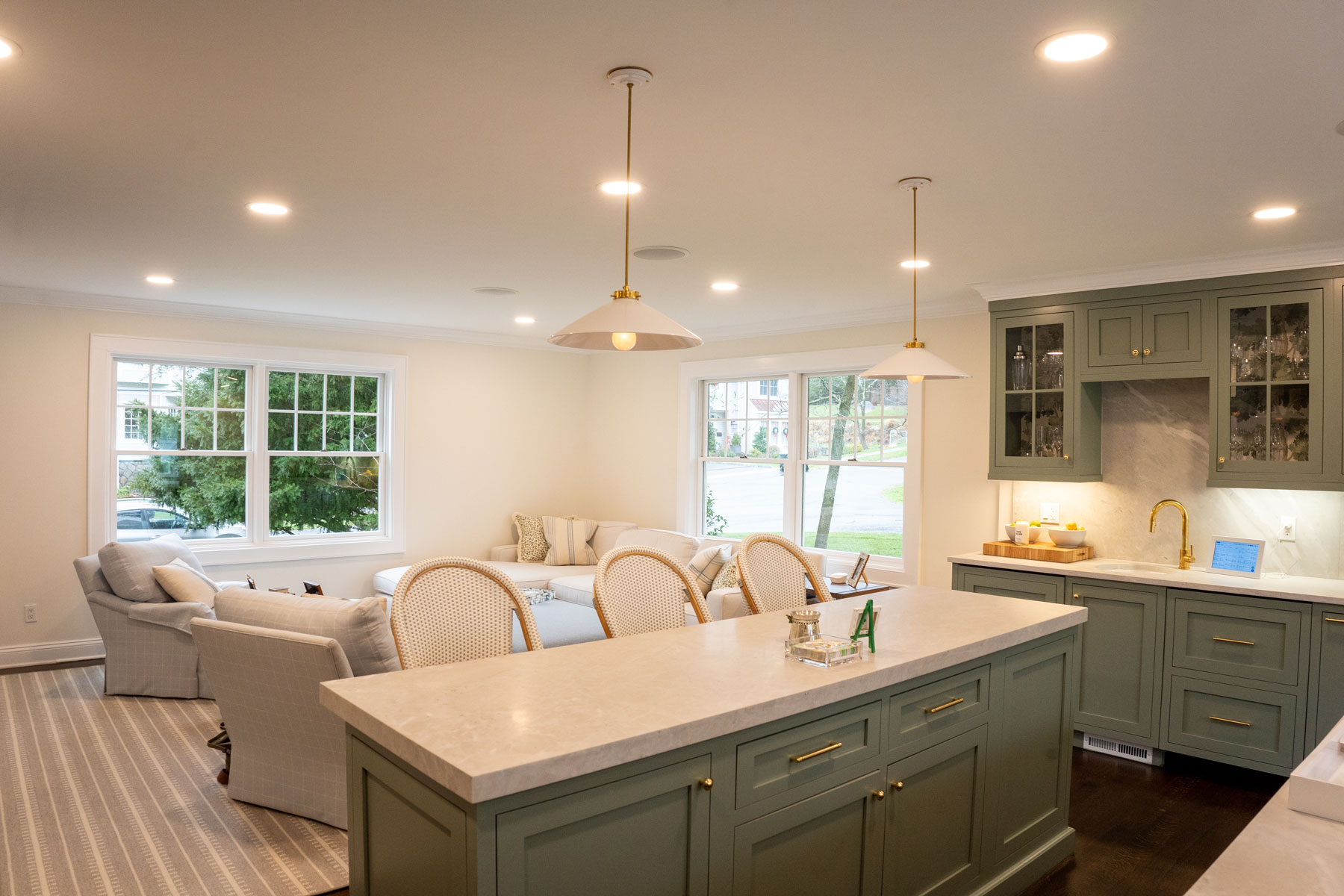
Lighting plan benchmarks: a practical spec table for remodel decisions
Use the table below as a field guide when talking with kitchen remodelers Riverside, your electrician, or your designer. It summarizes what each layer does, common fixture choices, and the specs that most often drive satisfaction.
| Lighting layer | Primary purpose | Common fixtures | 2026 spec targets (practical) |
|---|---|---|---|
| Ambient | General visibility and safe circulation | 3–4 inch recessed, low-profile flush mounts | 2700K–3000K, CRI 90+, deep regressed or glare-controlled trims |
| Task | Prep, cooking, sink cleanup, reading | Under-cabinet LED in channels, directional downlights, quality hood lighting | Front-edge under-cab placement, consistent CCT, flicker-free dimming (manufacturer-matched) |
| Accent | Mood, depth, highlighting finishes | Toe-kick LED, in-cabinet puck/linear, uplights | Diffused sources, separate dimmer zone, warm scenes for evenings |
| Controls (cross-layer) | Flexibility, energy management, comfort | Dimmers, keypads, smart switches, occupancy sensors (select areas) | 3+ scenes, compatible dimmers, labeled circuits, future-ready low-voltage planning |
Budget reality check: Lighting is rarely the biggest line item, but it is one of the most “felt” upgrades. The cost of doing it right is typically far lower than reworking it after cabinetry and stone are installed.
Common mistakes to avoid (and how Riverside homeowners can prevent them)
Most kitchen lighting issues are not caused by “bad fixtures.” They come from missing coordination between layout, cabinetry, and electrical plans. Here are the pitfalls we see most often in kitchen renovation Riverside CT projects.
Mistake 1: Relying on recessed lights as your only solution
Ceiling light alone often creates shadows on countertops because your body blocks light while you work. Fix: specify under-cabinet task lighting and consider directional downlights at key stations.
Mistake 2: Ignoring glare and reflectivity
Shiny tile, polished quartz, and stainless appliances can amplify glare. Fix: use diffusers, glare-controlled trims, and thoughtful aiming, and put accent lighting on separate dimmers.
Mistake 3: Mixing color temperatures across layers
A 3000K recessed grid with 4000K under-cabinet strips looks disjointed. Fix: select a single target (often 2700K or 3000K) and verify all fixtures match, including replacement lamps if any.
Mistake 4: Skipping a control plan
One switch for everything leads to either “too bright” or “too dark.” Fix: zone lighting by function and build simple scenes. If smart controls feel intimidating, start with high-quality dimmers and labeled circuits.
Mistake 5: Not planning for inspections and safe clearances
Electrical work must meet code and manufacturer clearance requirements. In Connecticut projects, coordination with your licensed electrician and local inspection requirements is non-negotiable. Plan early so drivers, transformers, and access panels are not hidden behind permanent finishes.
Conclusion
Layered lighting is the difference between a kitchen that looks good and a kitchen that liveswell. In Riverside, CT, the best outcomes come from coordinating lighting with cabinetry, finishes, and controls early, then verifying performance details like CRI and dimming compatibility.
If you are planning a kitchen renovation and want a lighting plan that is practical, code-conscious, and tailored to how you actually cook, Contact us and Remodeling Consultants can help you scope the right layers, fixture specs, and control zones for your home. Reach out to discuss your layout, and we will turn your reflected ceiling plan into a kitchen you will enjoy every day in 2026 and beyond.
Frequently Asked Questions
Q1: What are the three layers of kitchen lighting design?
The three layers are ambient (general), task (focused work light), and accent (decorative or highlighting light). A well-designed kitchen uses all three so you can cook safely, reduce shadows, and create mood. Controls tie the layers together into usable scenes.
Q2: How many recessed lights do I need in a Riverside, CT kitchen remodel?
There is no universal number because ceiling height, layout, and finish reflectivity change the outcome. The better approach is to place recessed lights to support circulation and key zones, then rely on under-cabinet and island lighting for task work. Your electrician and designer should confirm placement with the reflected ceiling plan.
Q3: Is under-cabinet lighting worth it in a kitchen renovation Riverside CT project?
Yes, it is one of the most noticeable functional upgrades because it removes countertop shadows. It also improves how stone and backsplash materials look at night. Most homeowners consider it essential once they live with it.
Q4: What color temperature is best for kitchens in 2026?
Most Riverside homeowners prefer 2700K to 3000K for a warm, upscale feel that still looks clean. If your kitchen has a lot of daylight or doubles as a workspace, tunable white or warm-dim fixtures can add flexibility. Consistency across layers is more important than chasing a trend.
Q5: Should I choose 3000K or 4000K for task lighting?
In most homes, 3000K feels balanced and matches typical ambient lighting. 4000K can look crisp, but it may read harsh against warm cabinets or wood floors. If you prefer 4000K, consider using it only in specific task zones and verify it does not clash with adjacent rooms.
Q6: Can I mix pendants and recessed lights over an island?
Yes, and it often performs better than pendants alone. Pendants add presence, while recessed or directional lights reduce shadows when you prep at the island. Put them on separate controls so you can change the mood easily.
Q7: What is CRI and why does it matter for kitchen lighting?
CRI measures how accurately a light source renders color compared to a reference. In kitchens, higher CRI helps food look natural and keeps cabinet and paint colors consistent. For most remodels, target CRI 90+.
Q8: Do smart switches and dimmers actually improve a kitchen remodel?
They can, especially when you use them to create reliable scenes like “Prep” and “Evening.” The key is compatibility between the dimmer and the LED driver to avoid flicker. If you want a simpler setup, start with high-quality dimmers and add smart control later.
Q9: When should lighting be finalized during kitchen remodeling services Riverside?
Finalize the lighting plan before electrical rough-in, ideally after cabinetry layouts are confirmed. Late changes can trigger drywall rework, cabinet modification, or delays in inspections. Early planning also ensures drivers and transformers have accessible locations.
Q10: How do I avoid glare on quartz countertops and glossy tile?
Use diffused sources for under-cabinet lighting and glare-controlled recessed trims. Aim lights carefully so reflections do not hit common sightlines, especially near sinks and islands. Separate dimming zones let you keep accent sparkle without making the whole room uncomfortable.