


Moisture is the silent budget-killer in bathroom renovations.In U.S. homes, indoor dampness and mold are linked to higher respiratory risk, and building science has long recognized bathrooms as a primary moisture source. The EPA notes that controlling moisture is the most effective way to prevent mold growth (U.S. EPA, 2024). For Westport homeowners investing in premium finishes, poor ventilation can turn a “dream bath” into peeling paint, warped millwork, grout discoloration, and recurring odors within months.
This 2026 guide explains exactly howventilation improves outcomes in high-end remodels, what systems work best in Westport’s climate, and how to specify fans, ducts, and humidity control systems to protect your investment. If you are comparing bathroom remodeling services westport options, this is the performance layer that separates a beautiful bathroom from a durable one.
Why ventilation is a make-or-break factor in Westport bathroom remodels?
Bathrooms generate intense, short-duration moisture loads from showers, tubs, and steamy baths. Without fast removal, water vapor migrates into drywall, framing, insulation, and even adjacent rooms. Over time, that moisture can cause material failure and indoor air quality issues.
Moisture damage is often hidden until it is expensive
Many Westport homes include older assemblies, tight remodeling tolerances, and high-end finishes like wallpaper, custom cabinetry, plaster, and natural stone. These materials can be less forgiving when humidity spikes. Mold and rot rarely start where you can see them first; they form behind tile backer, under floors, and around window trim.
Ventilation supports both durability and health
The EPA emphasizes that mold needs moisture to grow, so the primary control strategy is moisture management (U.S. EPA, 2024). Separately, ASHRAE’s residential ventilation standard (62.2) is widely used to guide fan sizing and whole-home ventilation requirements (ASHRAE, 2022). When your remodel aligns with these principles, you reduce condensation risk and protect indoor air quality.
What “good” bathroom ventilation looks like in 2026?
In 2026, bathroom ventilation is less about “having a fan” and more about documented performance. Homebuyers and inspectors increasingly expect quiet operation, correct ducting, and automatic humidity management, especially in higher-end Fairfield County markets.
Key benchmarks remodelers use
Most quality bathroom contractors in westport reference ASHRAE 62.2 guidance and local code requirements when designing exhaust. ASHRAE 62.2 provides minimum exhaust rates commonly interpreted as:
Note:Actual needs vary by room size, ceiling height, shower type, and how tight the house is after air sealing upgrades.
ENERGY STAR and why it matters
ENERGY STAR-certified bath fans are designed to meet verified airflow and sound performance thresholds. ENERGY STAR reports that certified ventilation fans are independently tested for airflow and sone ratings (ENERGY STAR, 2025). In practice, this reduces the “it’s running but not actually exhausting” problem that shows up with bargain fans and poor installs.
The direct impact on remodeling outcomes: finishes, structure, and long-term maintenance
Ventilation is a “multiplier” on your remodeling investment. When it is done correctly, it extends the service life of finishes and reduces call-backs for contractors and homeowners.
Tile, grout, and stone performance
Even with modern waterproofing membranes, persistent humidity can slow drying and encourage efflorescence, mildew, and discoloration in grout lines. Natural stones can be sensitive to moisture and require stable humidity for best long-term appearance.
Paint, wallpaper, and millwork
High humidity can cause latex paint to soften and peel, and wallpaper adhesives can fail. Wood cabinets and trim expand and contract with moisture swings, increasing the chance of sticking drawers, split joints, and finish checking.
Real-world Westport scenario
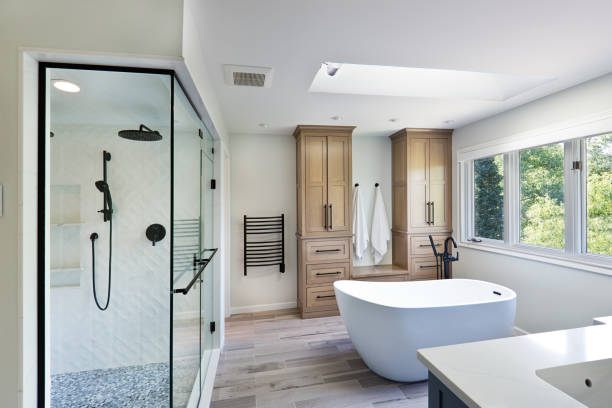
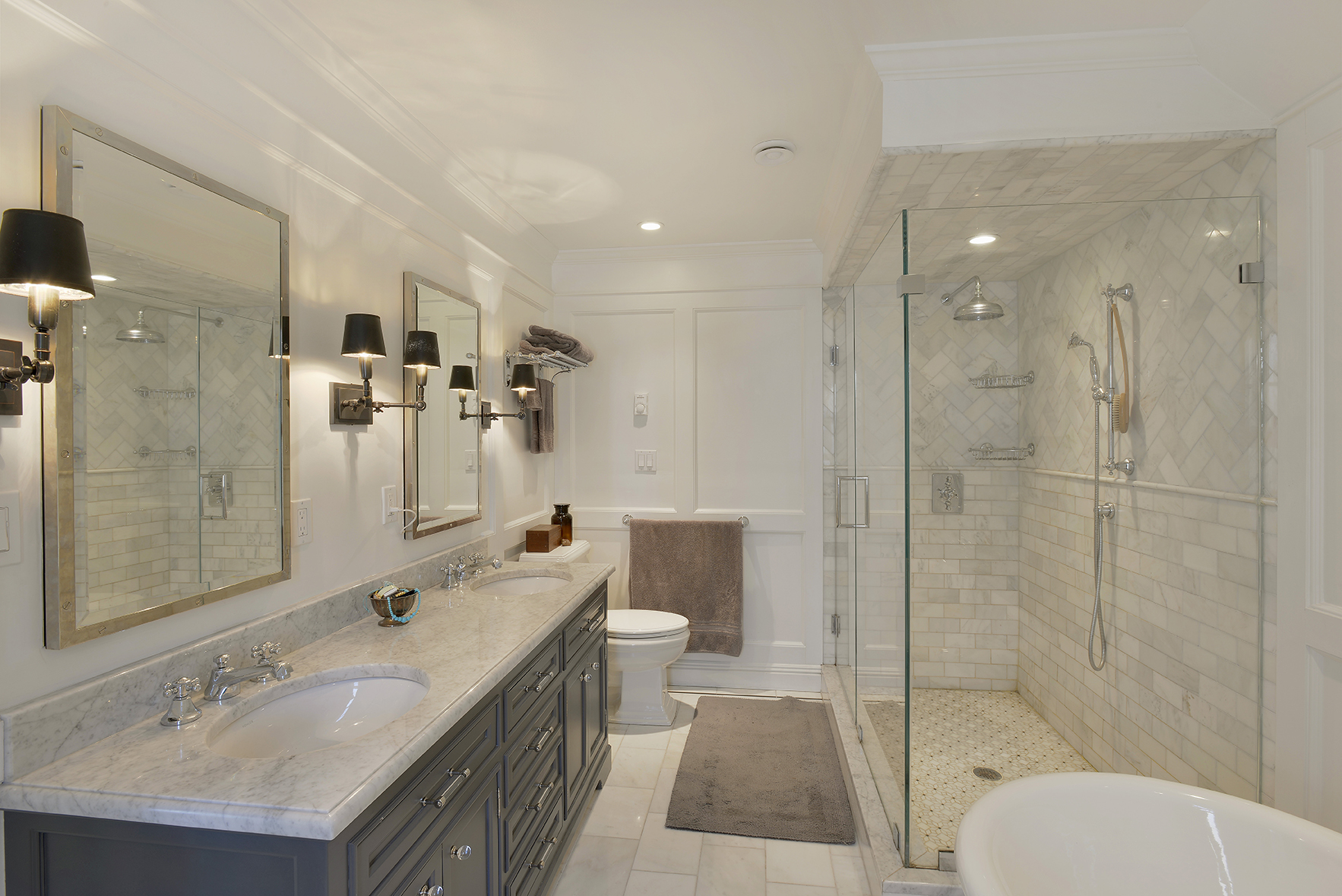
A common pattern we see in consultation: a beautiful primary bath remodel with a large rain head and hand shower, paired with an underpowered fan and flexible duct with multiple bends. The bathroom looks perfect at final walkthrough, but six months later the homeowner reports persistent mirror fog, musty odor, and darkening grout. The “fix” is often not cosmetic. It is correcting the ventilation path, upgrading to a higher-performing fan, and adding humidity-sensing controls.
Choosing the right system: fans, ducting, and humidity control systems
Not all ventilation systems deliver the same results. For homeowners searching “ bathroom remodelers near me,” it helps to ask for specifics: fan CFM, duct size, termination location, and control strategy.
Fan sizing: beyond the rule of thumb
Many contractors still default to simple sizing by square footage. That can miss key drivers like multiple shower heads, steam showers, or high ceilings. Practical best practice in 2026 is to size for the moisture event and ensure the duct system can actually deliver the rated airflow.
Ducting details that determine real performance
A fan’s rated CFM is measured under ideal conditions. In the field, long duct runs, undersized ducts, too many elbows, and crushed flex duct can significantly reduce airflow. Building Science Corporation has repeatedly highlighted how real-world airflow can fall below expectations when duct design is poor (Building Science Corporation, 2019).
Humidity control systems: the 2026 “set it and forget it” upgrade
Modern humidity control systems include onboard humidity sensors, wall-mounted humidistats, timers, and smart switches that automatically run the fan long enough to clear moisture. This is a major upgrade because many homeowners simply do not run fans long enough.
For the best outcomes, specify:
Ventilation options compared (what Westport homeowners should ask for)
The best system depends on bathroom size, shower usage, and how the home is being upgraded for energy efficiency. If your remodel includes air sealing, new windows, or insulation upgrades, ventilation becomes even more important to prevent trapped moisture.
| Approach | Best for | Pros | Watch-outs |
|---|---|---|---|
| Standard exhaust fan + manual switch | Powder rooms, light-use baths | Lowest upfront cost, simple | Relies on user behavior; often under-run |
| ENERGY STAR fan + timer switch | Most full baths | Improves consistency; supports proper dry-out | Must be set correctly; still user-dependent |
| Humidity-sensing fan or humidistat control | Primary baths, heavy shower use | Automatic moisture response; reduces mold risk | Needs correct placement to avoid false triggers |
| Continuous low-flow exhaust (with boost) | Tighter homes, major remodels | Stable baseline ventilation; good odor control | Requires thoughtful whole-home strategy (ASHRAE 62.2 context) |
| Dedicated strategy for steam showers | Steam units and luxury showers | Controls extreme moisture events | Under-designed systems lead to chronic condensation |
What is changing in 2026: smarter controls, tighter homes, and IAQ-first remodeling
Three trends are shaping Westport bathroom remodel expectations in 2026: smarter ventilation controls, tighter building envelopes, and stronger attention to indoor air quality (IAQ).
Smart controls are becoming standard in premium remodels
Humidity-sensing switches, app-enabled timers, and occupancy sensors are being specified more often because they reduce dependence on homeowner habits. This is especially valuable in secondary baths used by kids or guests, where fans are frequently forgotten.
Energy upgrades can increase moisture risk if ventilation is not upgraded too
As homeowners add insulation, air sealing, and high-performance windows, natural air leakage declines. The EPA has emphasized that moisture control is central to preventing mold (U.S. EPA, 2024), and tighter homes make mechanical ventilation more important, not less.
IAQ awareness continues to rise
IAQ has remained a major homeowner concern post-pandemic. The CDC highlights that mold can trigger asthma symptoms and other respiratory issues for sensitive individuals (CDC, 2023). In remodeling consulting, we increasingly see ventilation positioned as a health and asset-protection upgrade, not just a code checkbox.
Practical steps Westport homeowners can take during a remodel
If you are hiring bathroom contractors in westportor comparing bathroom remodelers near me, use this checklist to ensure ventilation is addressed early, when it is easiest and cheapest to do correctly.
Edge case:If your bathroom has no easy path to an exterior wall or roof cap, ask about options like relocating the fan, using an in-line fan for longer runs, or redesigning the duct route during framing. Planning this early prevents compromises later that reduce airflow.
Conclusion
In Westport bathrooms, ventilation is not a minor line item. It is the system that protects your tile, paint, cabinetry, indoor air quality, and long-term maintenance costs. When designed and installed correctly, it improves both everyday comfort and the durability of premium finishes.
If you are evaluating bathroom remodeling services westport and want a plan that prioritizes long-term performance, Remodeling Consultants can help you specify the right ventilation approach, coordinate it with your remodel scope, and avoid the costly “looks great, fails early” trap. The next step is a ventilation and moisture-risk review during design, before walls close and options narrow. Contact us for more information.
Frequently asked questions
Q1: What ventilation fan size do I need for a Westport bathroom remodel?
Many full baths perform well with 80 to 110 CFM, but larger primary baths and high-output showers often need 110 to 150+ CFM. The right number depends on room volume, duct length, and moisture load. Ask your contractor to size the fan and duct as a system, not as separate parts.
Q2: How long should I run the bathroom fan after a shower?
A common best practice is 20 to 40 minutes, depending on humidity levels and how quickly surfaces dry. A timer switch or humidity sensor makes this automatic and more reliable. The goal is to clear moisture before it migrates into walls and ceilings.
Q3; Are humidity control systems worth it in bathroom remodeling services westport projects?
Yes, especially for primary bathrooms and households that shower frequently. Humidity-sensing controls reduce the risk of mold and finish damage by ensuring consistent run time. They also help when guests or kids forget to use the fan.
Q4: Can a bathroom fan vent into the attic?
No, it should terminate outdoors. Venting into an attic can deposit moisture where it condenses and damages insulation and roof sheathing. Proper exterior termination is one of the highest-ROI details in a remodel.
Q5: Why is my new bathroom still foggy even with a fan?
Common causes include under-sized fan capacity, restrictive ducting (too long, too many elbows, crushed flex), or a poorly placed grille. Another frequent issue is that the fan is not run long enough. Commissioning the airflow and adding a timer or humidistat typically resolves it.
Q6: Should I choose an ENERGY STAR bathroom fan?
ENERGY STAR-certified fans are independently tested for airflow and sound performance (ENERGY STAR, 2025). This improves the odds that the fan will be both effective and quiet enough to use regularly. Installation quality still matters, so pair it with good ducting.
Q7: Do I need different ventilation for a steam shower?
Yes. Steam showers create extreme moisture loads and need a deliberate post-use purge strategy with adequate exhaust and controls. Discuss fan sizing, duct routing, and run-on timing during design, not after tile is installed.
Q8: How do I find bathroom contractors in westport who treat ventilation seriously?
Ask whether they size to ASHRAE 62.2 guidance, specify duct diameter and termination location upfront, and verify airflow after installation. Request photos of past ducting work, not just finished tile. The best teams treat ventilation as part of the waterproofing and durability system.
Q9: Is a quiet fan really important?
Yes, because homeowners are more likely to use quiet fans consistently. Loud fans often get turned off too soon, which leaves moisture behind. Lower sone ratings are a practical “behavioral” upgrade that improves real performance.
Q10: When should ventilation be planned during a bathroom remodel?
Plan it during layout and framing, before mechanical rough-in is finalized. That is when you can optimize duct routes, choose the right fan location, and avoid long runs and unnecessary bends. Waiting until finishes are selected can force compromises that reduce airflow