

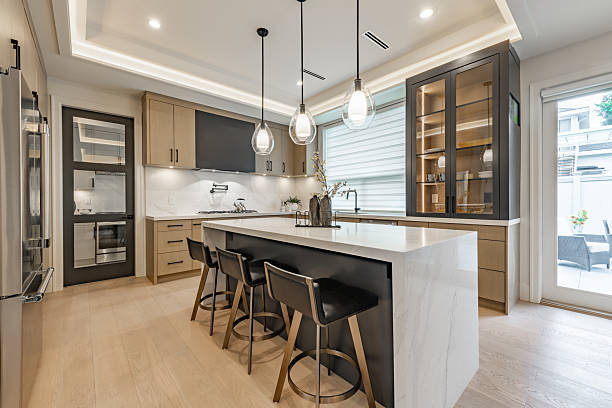
Kitchen floors take more abuse per square foot than almost any other surface in your home. Spills, grit, chair legs, pet claws, dropped pans, wet boots, and constant foot traffic all hit the same zone day after day. The data backs it up: kitchens and entries consistently rank among the highest-traffic interior areas, and slipping risk rises when floors are wet. In fact, falls are the leading cause of injury for adults 65+(CDC, 2023), making slip resistance a serious durability and safety factor, not a nice-to-have.
If you are planning kitchen remodeling in Darien in 2026, flooring is where “pretty” must meet “practical.” This guide breaks down the most durable kitchen flooring options for Darien homes, how to choose based on real wear scenarios, what’s changed in 2026 (materials, coatings, and installation methods), and the mistakes that quietly shorten a floor’s lifespan.
What “durable” really means in a Darien kitchen?
Durability is not one attribute. It is a combination of performance metrics that determine whether a floor stays structurally sound and visually acceptable under real kitchen conditions.
Darien-specific realities to plan for
Darien homeowners often balance upscale aesthetics with family and entertaining use. That typically means more traffic, heavier furniture, and higher expectations for a “like new” look. Also, coastal Connecticut humidity swings can stress some materials and subfloors. For any kitchen remodel, ask your installer about subfloor flatness, moisture testing, and expansion gaps, because most premature failures are installation-related, not product-related.
Durability-by-material: what top kitchen remodelers in Darien recommend most often
In our renovation consulting work at Remodeling Consultants, we see five materials dominate durable kitchen design decisions: porcelain tile, luxury vinyl (LVP/LVT), engineered hardwood, natural stone, and polished concrete (or concrete-look alternatives). Each wins in different “abuse profiles.”
Porcelain tile (best for heat, water, and long-term wear)
Porcelain tile is among the most durable kitchen renovation materials available. It is fired at high temperatures, dense, and highly moisture tolerant. Properly installed, it can last for decades, and it is compatible with radiant heat, a growing comfort upgrade in 2026 kitchen renovations.
Tradeoffs: it is hard underfoot, grout maintenance is real, and dropped items break more easily. If you hate grout upkeep, choose large-format tile(fewer grout lines) and specify a high-performance grout.
Luxury vinyl plank/tile (best “real life” durability per dollar)
Quality LVP/LVT has improved dramatically, particularly in rigid-core constructionsand thicker wear layers. For many households, it is the most forgiving choice: quieter, warmer, and more impact-friendly than tile. It also handles spills well when seams and perimeter details are done right.
Tradeoffs: it can dent under heavy point loads, and some products show gloss wear patterns in heavy traffic. Look for a reputable brand with published test data and a wear layer that matches your use level.
Engineered hardwood (best for “Darien classic” aesthetics with better stability)
Engineered hardwood offers the warmth buyers love, with improved dimensional stability versus solid wood. In many Darien homes, it helps unify an open-plan main level. If resale and visual continuity are major priorities, engineered hardwood can be the right compromise.
Tradeoffs: it is not waterproof, and repeated wet mopping or dishwasher leaks can cause swelling. Also, not all engineered floors can be refinished multiple times, so veneer thickness matters.
Natural stone (best for luxury, but maintenance-heavy)
Stone floors (slate, limestone, marble) deliver unmatched natural character, but durability depends on the specific stone’s hardness and porosity. Many stones need sealing and gentler cleaning chemistry. Some become slippery when polished, which is a risk in kitchens.
Polished concrete and concrete-look surfaces (best for modern durability)
True concrete floors can be extremely durable, but they are system-dependent (substrate, control joints, coatings). In 2026, many homeowners get the “concrete look” via porcelain slabs, microtoppings, or high-performance overlays that reduce cracking risk while keeping an industrial aesthetic.
Comparison table
Use the table below as a practical starting point. Scores reflect typical residential performance when properly installed and maintained. Your results will vary based on product tier and installer quality.
| Material | Water resistance | Scratch/abrasion resistance | Comfort + noise | Maintenance burden |
|---|---|---|---|---|
| Porcelain tile | Excellent | Excellent | Low | Medium (grout) |
| Luxury vinyl (LVP/LVT) | Very good to excellent (product-dependent) | Good to very good | High | Low |
| Engineered hardwood | Fair | Good (finish-dependent) | High | Medium |
| Natural stone | Fair to good (seal-dependent) | Varies by stone | Low | High |
| Concrete / overlays | Good (coating-dependent) | Good | Low to medium | Medium |
Consultant note:If your household has kids, large dogs, and frequent entertaining, LVP or porcelain often outperforms hardwood in “stress tests” like chair movement and spill frequency. If you prioritize resale in classic Darien neighborhoods, engineered hardwood still performs well when you build in leak prevention and maintenance habits.

Cost, value, and ROI signals homeowners should understand in 2026
Flooring is both a performance decision and a financial one. While exact pricing varies by product tier and site conditions, durability upgrades often pay back by reducing replacement cycles and protecting adjacent finishes.
Why kitchens demand higher-performing surfaces?
Kitchens are expensive to remodel, so it makes little sense to save a small percentage on flooring and risk early failure. Nationally, remodeling budgets remain significant: the median spend for a major kitchen remodel was $60,000(Houzz U.S. Kitchen Trends Study, 2024). If you are investing at that level, durability choices become risk management.
Resale influence and buyer expectations
Durable, cohesive flooring supports buyer confidence. On ROI, a minor kitchen remodel recouped about 96% of cost on average(Zonda Media, Cost vs. Value Report, 2024), while major remodels typically recoup less. In Darien, local comps, finish level, and workmanship matter even more than national averages, but the takeaway holds: align the floor with the home’s value bracket and buyer expectations.
What’s changing in 2026: durability trends in kitchen renovation materials?
2026 remodeling is less about “new” materials and more about better systems: improved coatings, smarter underlayments, and healthier indoor air choices.
Trend 1: healthier, lower-VOC flooring and adhesives
Homeowners increasingly ask about indoor air quality. This trend is supported by public health guidance that indoor pollutant levels can be higher than outdoors. The EPA has long noted that indoor air can be 2 to 5 times more polluted than outdoor air(U.S. EPA, updated guidance widely cited). In 2026, more brands publish transparency documents (EPDs/HPDs) and certifications (e.g., FloorScore, GREENGUARD Gold).
Trend 2: large-format porcelain and “grout minimization”
We are seeing more 24×48 and larger formatsin kitchens to reduce grout lines and simplify cleaning. This is especially helpful for busy households where “maintenance durability” matters as much as impact resistance.
Trend 3: rigid-core LVP upgrades and better underlayment acoustics
Rigid-core vinyl continues to evolve with more stable cores and improved attached pads. In open-concept Darien homes, sound control is part of perceived quality. Ask for lab data on IIC/STC ratings if sound transfer is a concern, especially in multi-level layouts.
Trend 4: leak detection and prevention as a flooring strategy
Floor durability is increasingly tied to water event management. With more smart home adoption, we recommend simple add-ons: dishwasher leak pans, under-sink mats, and smart shutoff valves where appropriate.
Conclusion
In 2026, durable kitchen floors are less about chasing a single “best material” and more about matching the surface to your household, then installing it as a complete system. The most successful projects treat flooring as a performance layer that must handle water, grit, impact, and cleaning for years.
If you are planning kitchen remodeling in Darien and want a durability-first recommendation tailored to your layout, lifestyle, and budget, Remodeling Consultants can help you compare materials, vet specifications, and pressure-test installer scopes before you commit. The next step is simple: document your wet zones, traffic patterns, and maintenance tolerance, then request a flooring spec sheet review as part of your remodeling plan. Contact us today to discuss your project and get expert guidance on selecting the right flooring solution for your kitchen.
Frequently asked questions
Q1: What is the most durable kitchen flooring for a Darien remodel?
For pure durability against water, heat, and abrasion, porcelain tile is typically the top performer when installed correctly. For comfort and day-to-day forgiveness, high-quality rigid-core LVP often delivers the best balance of durability and livability. The “best” choice depends on your wet-zone exposure and maintenance tolerance.
Q2: Is luxury vinyl plank actually durable enough for high-end kitchens?
Yes, premium LVP can be very durable, especially for scratches and spills, but performance is product-dependent. Focus on reputable manufacturers with published specs, a wear layer appropriate for heavy residential use, and installer-verified subfloor flatness. Avoid ultra-thin budget lines in heavy-traffic kitchens.
Q3: Should I choose engineered hardwood or porcelain tile for kitchen remodeling Darien projects?
Choose engineered hardwood if warmth, continuity with adjacent rooms, and classic resale aesthetics are the priority. Choose porcelain tile if water events, radiant heat compatibility, and long-term wear are the priority. Many homeowners split the difference by using wood elsewhere and tile in the kitchen, tied together with thoughtful transitions.
Q4: How do I know if a floor is truly waterproof?
“Waterproof” should mean the product and locking system can resist water intrusion for a defined period, but seams, edges, and penetrations still matter. Ask for written manufacturer claims and installation requirements, and confirm the warranty language. Even waterproof floors can fail if water is trapped under the system.
Q5: What kitchen flooring is best for pet claws and heavy chair traffic?
Textured porcelain and quality LVP tend to resist visible scratching better than many wood finishes. Matte finishes and patterns that hide micro-scratches help floors look newer longer. Regardless of material, add felt pads and keep grit under control.
Q6: Can I install radiant heat under LVP or engineered wood in my kitchen?
Sometimes, but only if the specific product is approved for radiant heat and installed within the manufacturer’s temperature limits. Porcelain tile is generally the safest and most common radiant companion. Always coordinate between the flooring manufacturer, installer, and heating system provider.
Q7: What are the biggest installation red flags to watch for with kitchen remodelers Darien homeowners hire?
Red flags include no documented moisture testing, no plan for floor flatness/leveling, and vague answers about transitions and expansion gaps. Also watch for bids that skip waterproofing details near dishwashers and sinks. A good installer can explain the system, not just the surface.
Q8: How long should a durable kitchen floor last?
Porcelain tile can last decades, while LVP and engineered wood lifespans depend heavily on product tier, traffic, and maintenance. The practical goal is not just years until failure, but years until it looks worn. Plan for protective measures that preserve appearance, not only structure.
Q9: What is the easiest durable kitchen floor to maintain in 2026?
LVP is often the easiest because it tolerates routine cleaning and does not require sealing. Porcelain tile is also low-maintenance, but grout lines add upkeep unless you minimize grout with large-format tile and use high-performance grout. Avoid high-maintenance stone if you will not seal it consistently.
Q10: How do I protect my new kitchen floor from water damage?
Use a dishwasher leak pan, under-sink mat, and a water alarm, and address caulk and transitions carefully during installation. Clean spills quickly and avoid over-wet mopping on wood-based products. If you travel often, consider a smart water shutoff valve for added protection.