

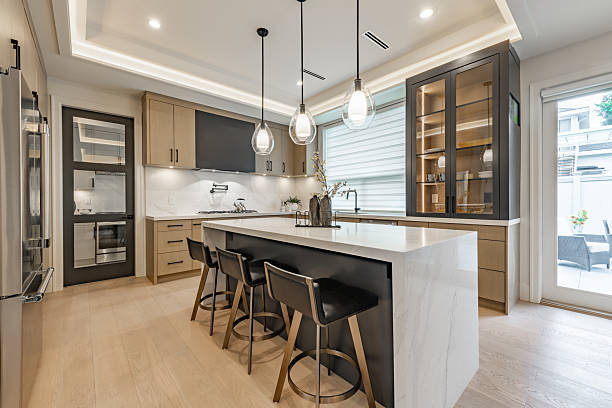
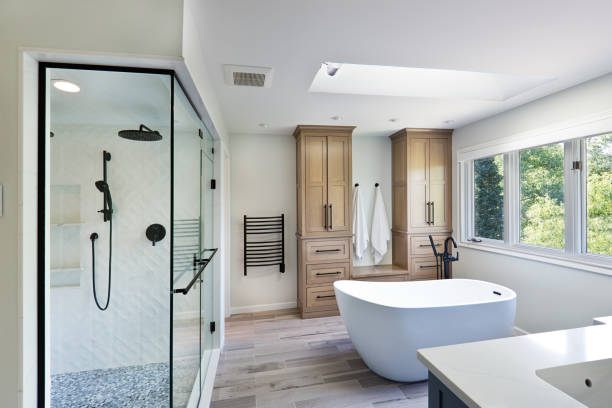
Most homeowners don’t run out of kitchen space, they run out of organized space.In fact, the National Kitchen and Bath Association reports that storage and organization features remain among the most requested kitchen improvements, with pantry storage, pull-outs, and waste/recycling solutions consistently ranking as “must-haves” in client wish lists (NKBA, 2024). For anyone planning kitchen remodeling Darien projects in 2026, integrated storage is no longer a luxury add-on. It is the difference between a kitchen that photographs well and a kitchen that works flawlessly every day.
In this guide, you’ll learn how to plan kitchen storage systems strategically: what to measure, which solutions deliver real ROI, what trends matter in 2026, what local Darien home styles imply for layouts, and how to avoid costly mistakes. You’ll also get practical checklists you can use before you call kitchen remodeling contractors.
Why integrated storage planning matters in Darien kitchens?
Darien homes often balance classic architecture with modern expectations. That creates a common tension: homeowners want clean sightlines and minimal clutter, but they also want the kitchen to handle busy family routines, entertaining, and work-from-home realities. Integrated storage solves that tension by designing where items live before cabinets are ordered, not after.
Storage-first planning reduces change orders and “dead space”
Change orders are one of the biggest budget disruptors in remodeling. While exact change-order rates vary by market and contract structure, industry best practice is to reduce them by locking in storage needs early, before final cabinet drawings and rough-ins. Integrated planning also minimizes unusable cabinet corners, awkward filler panels, and “junk drawer creep” that happens when the design looks good but the storage logic is missing.
Integrated storage supports resale and livability
Kitchen remodels remain one of the most valuable home investments. Remodeling magazine’s Cost vs. Valuereport shows a midrange major kitchen remodel recoups about ~50% to 60%nationally depending on scope and year (Zonda Media, Cost vs. Value Report, 2024). While storage alone isn’t a line item on resale, buyers recognize functional kitchens quickly, especially in high-value markets where expectations are high.
Budget and ROI: what integrated storage typically costs (and what’s worth it)
Storage features can quietly add thousands to a cabinet package. The key is to pay for the features that reduce friction daily and avoid “novelty accessories” that don’t match your routine.
Nationally, cabinet costs often represent a major portion of kitchen remodeling budgets. HomeAdvisor reports that cabinets commonly make up a significant share of a kitchen remodel budget, often in the ~25% to 35%range depending on scope and market (HomeAdvisor, 2024). In Darien, premium finishes and custom or semi-custom cabinetry can push that share higher.
| Storage feature | Best use case | Typical cost impact (relative) | Expert verdict |
|---|---|---|---|
| Deep drawer bases | Pots, pans, dishes, daily cookware | $$ | High valuefor usability and ergonomics |
| Trash/recycling pull-out | Prep zone, family kitchens | $-$$ | High valueif placed correctly |
| Roll-out shelves | Budget-friendly accessibility upgrades | $ | Great alternative to full drawer conversion |
| Blind corner pull-out system | L-shaped kitchens with unavoidable corners | $$$ | Use only when layout cannot be improved |
| Appliance garage | Minimize counter clutter, coffee station | $$ | High value if you commit to storing appliances |
How to prioritize: spend first on drawers and waste/recycling, then pantry organization, then “nice-to-have” accessories. If budget tightens, simplify door styles or hardware before cutting functional storage.

2026 trends shaping kitchen storage systems
In 2026, kitchen remodeling is being shaped by two macro forces: households demanding more utility from the kitchen, and technology that makes storage more customizable. The result is a shift toward concealed, integrated, and modular storage that keeps visual clutter down.
Trend 1: “Unfitted” kitchen looks with fitted storage performance
Home design media continues to spotlight unfitted aesthetics (furniture-like pieces, mixed materials). The practical version of this trend is using furniture-style elements while keeping interiors highly engineered with drawer organizers, tray dividers, and roll-outs. The outside can look timeless, while the inside works like a modern system.
Trend 2: Better waste management and recycling integration
Waste sorting is becoming more common, and many homeowners want bins concealed but easy to use. Integrated pull-outs with multiple bins, odor control, and dedicated compost containers are increasingly requested. This aligns with broader consumer behavior trends: the EPA reports that the U.S. recycling rate has hovered around the low 30% range in recent years (U.S. EPA, Advancing Sustainable Materials Management, 2022), and homeowners are looking for systems that make correct sorting effortless.
Trend 3: Charging, lighting, and “invisible” power
Lighting and power are now part of storage planning. Consider under-cabinet lighting, in-drawer charging for devices, and appliance garage outlets. NKBA’s trend reporting highlights growing interest in layered lighting and functional workspaces in kitchens (NKBA, 2024).
Trend 4: Aging-in-place ergonomics
Even when homeowners are not explicitly remodeling for aging-in-place, the ergonomics are similar: fewer deep bends, more drawers, better lighting, and easy-reach shelving. Universal design elements are increasingly normalized as “smart design,” not “medical design.”
Integrated planning with your kitchen remodeling contractors: a step-by-step workflow
The best results come when storage is planned alongside layout, MEP (mechanical, electrical, plumbing), and cabinet engineering. Here is a workflow we use in renovation consulting to keep decisions aligned and prevent expensive revisions.
Actionable tip: Ask your designer or builder for a cabinet elevation packet that labels storage intent (not just sizes). This helps you compare “kitchen remodelers near me” on more than door style and price.
Common mistakes to avoid (and how to prevent them)
Most storage problems are predictable. They happen when kitchens are designed for aesthetics first and real-life use second.
Mistake 1: Underestimating small appliances
Air fryers, espresso machines, stand mixers, and blenders eat counter space. Fix it with an appliance garage, a dedicated coffee station, or a pantry counter with outlets. If you do nothing, clutter returns within weeks.
Mistake 2: Overbuilding corner solutions instead of fixing the layout
Blind corner pull-outs can be expensive and sometimes frustrating to use. In many L-shaped designs, it can be smarter to redesign the run lengths, add a tall pantry, or use a dead corner with accessible drawers on either side.
Mistake 3: Not planning trash/recycling early
Trash placement affects the prep workflow, plumbing, and base cabinet selection. Plan it as a primary function, not a leftover gap. In family kitchens, we often recommend a two-bin pull-out plus a slim compost container near the prep zone.
Mistake 4: Too many narrow uppers and not enough functional lowers
Upper cabinets are useful, but base storage does the heavy lifting. Over-reliance on uppers can create cluttered sightlines and harder access. Prioritize deep drawers and smart base storage; use uppers for lighter items and infrequent use.
Mistake 5: Skipping lighting inside key storage areas
Walk-in pantries and deep base cabinets benefit from lighting. Add pantry ceiling lighting and consider toe-kick lighting for safety at night. This is a relatively low-cost upgrade with high day-to-day value.
Conclusion
Integrated storage planning is one of the smartest ways to make a Darien kitchen feel bigger, calmer, and easier to live in, without blindly expanding square footage. When storage is treated as a system, you get a kitchen that performs as well on weekday mornings as it does when guests arrive.
If you’re planning kitchen remodeling Darien and want a storage-first plan you can hand to your builder or cabinet line, Remodeling Consultants can create a zone-based storage map, cabinet intent elevations, and an accessory allowance strategy tailored to how your household actually lives. Bring a quick inventory list and a few photos of your current pain points, and we’ll turn them into a buildable system. Contact Us to start designing your kitchen storage solution today.
Frequently asked questions
Q1: What are integrated kitchen storage systems?
Integrated kitchen storage systems are planned solutions that combine cabinet interiors, organizers, and placement logic so items live where you use them. They include drawer configurations, pull-outs, tray dividers, pantry layouts, and concealed waste solutions designed as part of the remodel, not added later.
Q2: How do I plan storage for a kitchen remodeling Darien project?
Start with an inventory of what you store and map it to prep, cook, clean, serve, and pantry zones. Then translate those zones into specific cabinet types and locations (drawers, tall pantry, pull-outs). Share that storage map with your designer or contractor before cabinet ordering.
Q3: Should I choose drawers instead of lower cabinets with doors?
In most cases, yes for daily-use items. Deep drawers improve visibility and reduce bending, which boosts long-term satisfaction. Keep some door cabinets for bulky, irregular items if needed.
Q4: Where should trash and recycling go in a remodel?
Place it in or next to the prep zone, ideally within one step of your primary cutting surface. A pull-out system keeps bins concealed and prevents traffic conflicts near the sink or refrigerator.
Q5: What is the most cost-effective storage upgrade?
Roll-out shelves and targeted drawer conversions are often the best “bang for the buck.” A well-placed trash/recycling pull-out also delivers high daily value with modest cost impact compared to larger layout changes.
Q6: Do I need a walk-in pantry, or is a tall pantry cabinet enough?
Many kitchens function better with one or two tall pantry cabinets, especially if floor space is limited. Walk-in pantries are great for bulk storage and appliance parking, but they need intentional shelving, outlets, and lighting to avoid becoming clutter rooms.
Q7: How do I compare kitchen remodelers near me for storage planning quality?
Ask to see cabinet elevations that label storage intent and request examples of past projects with drawer and pantry organization details. A strong pro will discuss zones, workflows, and accessory allowances, not just finishes and door styles.
Q8: What are common mistakes kitchen remodeling contractors see with storage?
Top mistakes include forgetting small appliance storage, placing trash far from prep areas, overspending on corner gimmicks, and under-lighting pantries. Most are preventable with a storage map and a routine-based walkthrough during design.
Q9: Can I improve kitchen storage systems without a full remodel?
Yes. You can add roll-out shelves, drawer organizers, pull-out trash systems, and pantry shelving upgrades in many existing cabinets. If the layout is the real issue, partial updates may help but will not fully solve workflow problems.
Q10: When in the project should storage accessories be selected?
Select them during design development, before final cabinet ordering and before electrical plans are completed. Waiting too long can force compromises, such as losing outlets in an appliance garage or missing the correct base cabinet sizes for pull-outs.